Have you ever had a catastrophic cooking experience that you can still clearly remember today? For me, it was the moment I opened my brand-new glass top stove and found a hot lid upside down. Can you picture the dread when I heard the glass crack? I had no notion that you shouldn’t put a hot lid facedown on a stove that was almost brand new. Following this horrible incident, I became more aware of kitchen safety, educated myself on how to use appliances properly, and exercised extreme caution when using them.
Despite all that prudence, I still encounter these kinds of situations. I was scrolling through my favorite kitchen-related Facebook group a few days ago when I noticed something that startled me. One homeowner shared a photo of what looked like chili all over their stove on social media. It was completely covered in chili, so much so that you couldn’t even see the surface. According to her, the chili was cooked for six hours on high in a crockpot. She returned it to the stove and cooked it for an extra hour since it wasn’t done. When she attempted to put the cooled crock in the refrigerator, the bottom popped out, causing the chili to flow everywhere. The thought of how we would clean things up is beyond me. If that were me, I believe I would cry for five or six hours before attempting to figure out how to clean up the mess.
Where did this situation go wrong? Many people left comments on her post, and the general conclusion was that setting a crockpot on the stove is something you should never, ever do. However, why is it the case?
No, a crockpot should never be used on the stovetop. Slow cookers, such as crockpots, are perfect for cooking soups, stews, and chili since they cook food slowly over low heat. Instead of being heated to a high temperature like a stovetop burner, the ceramic insert in the crockpot is meant to be heated on the low, continuous heat of a slow cooker. Here’s why using a crockpot on the stovetop can be risky:
The ceramic crocks used in the construction of crockpots, also known as slow cookers, are prone to chipping or breaking when subjected to sudden temperature changes or heat sources. Placing a ceramic insert on a stovetop exposes it to heat that it was not designed to withstand. Gas or electric stovetop burners produce a highly concentrated heat source that can cause the ceramic to heat up rapidly. As we witnessed on the viral Facebook post, this may result in cracks or possibly the bottom of the crockpot breaking off.
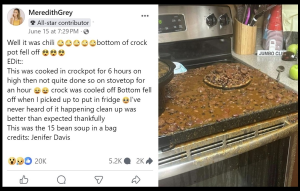
A number of things might happen if you put your crockpot on the cooktop, and none of them are good. The most common issue is that your stove will get messy because the ceramic insert may shatter or chip. This can result in burns from the hot meal in addition to creating a lot of mess. Additionally, if your stovetop is glass or ceramic, the ceramic bits could scratch it.
The ceramic insert might not break instantly and might start to show tiny, invisible cracks. The integrity of the crockpot may be jeopardized by these cracks, raising the possibility that it may break when it is used again. In the unlikely event that the crockpot’s heating element is harmed during the procedure, we cannot completely rule out the potential for electrical hazards.
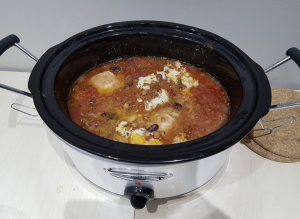
Is it acceptable to use any ceramic dish on the stovetop? Usually, the response is no. The majority of ceramic dishes are not intended for use with cooktop burners. Of course, there are some unique types of pots that are meant to be used on the stove, such ceramic cookware or flameware, but these are the exception. It’s also crucial to use any ceramic dish on the stove according to the manufacturer’s instructions.
What then can we draw from this? Your crockpot belongs on the counter. Keep it there. This pot excels at slow cooking, which is its intended use. Use a saucepan or skillet designed for stovetop use if you must transfer your food to the burner. You’ll enjoy it for your kitchen (and your sanity), I promise.
However, this is based on personal experience; since my own disaster with the glass top stove, I’ve developed a bit of an obsession with kitchen safety. Even though I use my various culinary gadgets more carefully, I still enjoy trying out new dishes. Furthermore, I’m constantly reminded that the next major kitchen mishap could happen at any time when I hear about someone else’s disastrous kitchen experiment. Thus, let’s exercise caution and avoid using crockpots on stovetops!


